Press Releases
Montgomery County Releases ‘Health Care Providers’ Handbook on Sikh Patients’ to Advance Culturally Competent Care
For Immediate Release: Friday, February 20, 2026
Montgomery County’s Asian Pacific American Advisory Group (APAAG) has released a new resource, the “Health Care Providers Handbook on Sikh Patients,” to help health care professionals provide compassionate, respectful, and culturally competent care to Sikh patients.
The handbook was adapted for local use from a publication developed by Queensland Health, Government of Australia. Sikhism is the world's fifth-largest religion, with an estimated 200,000 to 500,000 adherents in the United States. Approximately 10,000 Sikhs live in Montgomery County.
The project was led by APAAG Co-Chair Ishani Chowdhury, following the 2023 release of the “Health Care Providers Handbook on Hindu Patients.” Since that was published, Chowdhury has worked with hospitals in Montgomery County to provide webinars and continuing education classes based on the guide.
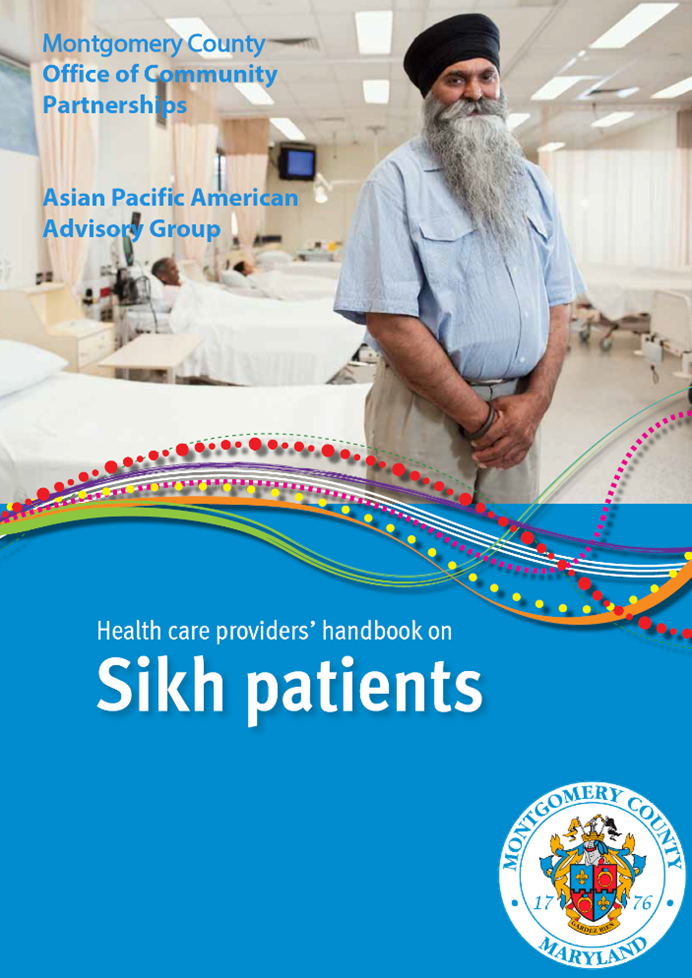
The new handbook emphasizes patient-centered care and encourages providers to consult directly with patients and their families regarding individual religious observance. It also includes information about local Sikh organizations and Maryland health resources.
“Religious and cultural identity isn’t separate from a person’s health — it’s part of it,” said Montgomery County Executive Marc Elrich. “When we provide care that respects a patient’s faith and traditions, we’re delivering better care, plain and simple. This guide goes beyond general awareness and provides our health care providers with practical tools to ensure Sikh patients are treated with dignity, understanding, and respect. Too often, a lack of knowledge about Sikh beliefs and practices can lead to confusion, discomfort, or care that falls short. This guide is an important step in closing that gap and ensuring every patient feels safe, valued, and properly cared for.”
The handbook addresses several key topics, including:
- The Five Articles of Faith (5 Ks): Information on Kesh (uncut hair), Kanga (wooden comb), Kara (steel bracelet), Kachera (cotton undergarment), and Kirpan (ceremonial sword), with guidance on respectful handling during examinations and emergency procedures.
- Dietary and Medication Considerations: Overview of dietary practices, including avoidance of ritually slaughtered meat, and perspectives on medications.
- Sexual and Reproductive Health: General views related to contraception, abortion, and assisted reproductive technologies.
- End-of-Life and Spiritual Care: Guidance on accommodating prayer, Kirtan (devotional music), family presence, and post-mortem practices.
- Communication and Modesty: Best practices for addressing language barriers and ensuring patient modesty and privacy, including preferences for same-sex practitioners when possible.
“We believe this resource will become an essential tool in health care settings nationwide,” said Chowdhury. “It empowers providers to deliver care that is clinically sound and culturally sensitive, fostering trust and improving health outcomes.”
The handbook is available for download on the Asian American Health Initiative website. APAAG also is developing a handbook on caring for Muslim patients, which is expected to be released in 2027.
About the Asian Pacific American Advisory Group:
Members of the APAAG ensure that the County Executive is well informed and able to respond effectively to the needs and concerns of the County's diverse communities, and to work collaboratively with government, nonprofits, and community organizations to create an inclusive, equitable, and welcoming County. APAAG co-chairs are Ishani Chowdhury and Devan Shah. Meetings are held regularly, and many are open to the public.
For information about hosting a seminar on this topic, please contact Yi Shen at [email protected].
# # #
Release ID: 26-057Media Contact: Yi Shen 240-277-3684
Categories: Consumer, Education, Health